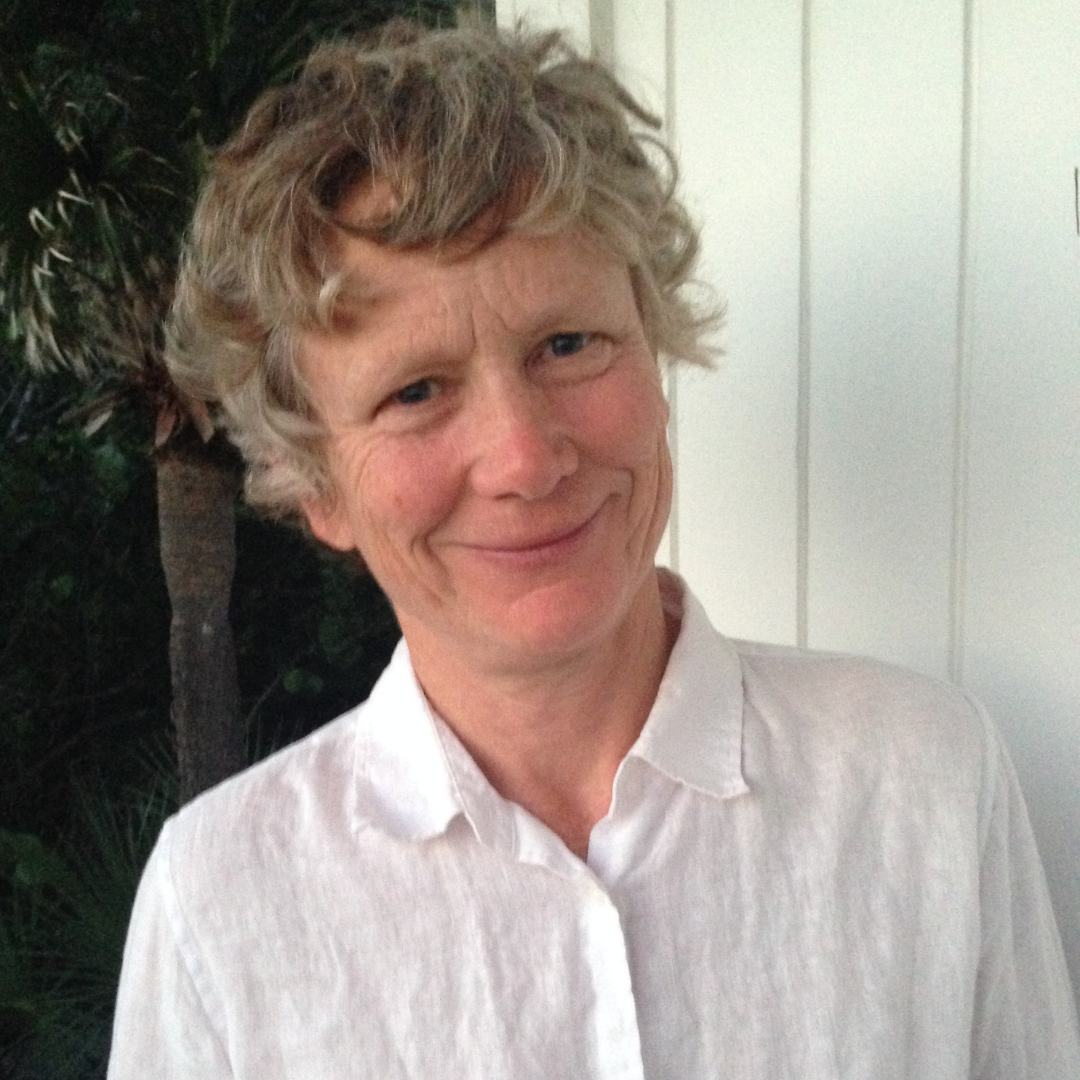
Jennifer Monson
(IL/NY)
2015
- Jennifer Monson is a choreographer, performer, teacher and dance curator who balances her artistic research and choreographic work between New York City and the University of Illinois Urbana Champaign. Since 1983, she has explored strategies in choreography, improvisation and collaboration in experimental dance. In 2000, her work took on a radical new trajectory towards the relationship between dance and environment. This has led her into an investigation of cultural and scientific understandings of large-scale phenomenon such as animal navigation and migration, geological formations such as aquifers and re-functioned sites such as the abandoned Ridgewood Reservoir. These investigations provide the means to unearth and inquire into choreographic and embodied ways of knowing and re-imagining our relationship to the environments/spaces we inhabit. Her project BIRD BRAIN (2000- 2005), iMAP/Ridgewood Reservoir (2007) and the Mahomet Aquifer Project (2008-2010) and SIP (sustained immersive process)/watershed (2010) are projects that have radically reframed the role dance plays in our cultural understandings of nature and wilderness. By bringing the work into outdoor settings and creating a framework for viewing the work through workshops, panel discussions and community involvement, she has found ways to re-engage the general public in a heightened physical and sensory experience of the phenomena and systems that surround us. Her current project Live Dancing Archive (2012) proposes that dance systems themselves are archival bodies for the dynamics of ecosystems.
read more
The project includes an online digital archive and video installation drawing primarily on BIRD BRAIN and other environmental works. Her early choreographic work has been performed in experimental New York City venues such as The Kitchen, Performance Space 122, and Danspace Project at St. Mark’s Church; as well as nationally. The BIRD BRAIN project and the theatrical version Flight of Mind were performed at Dance Theater Workshop, NYC; the Walker Arts Center, Minneapolis, MN; Diverseworks, Houston, TX; Museum of Contemporary Art, Chicago, IL; Tigertail Productions, FL; and Helena Presents, Helena, MT. Monson’s work rigorously investigates the body as a vehicle to re-conceptualize the nature of form and to constantly renegotiate the relationships between art, environment, power, and place. She has received a wide range of foundation support for her artistic work. Her work has received funding from the MAP Fund, New York Foundation for the Arts BUILD grant, Creative Capital Foundation, Geraldine R. Dodge Foundation, Jerome Foundation, New England LEF Foundation, Altria Group, Inc., National Dance Project, National Performance Network, the National Endowment for the Arts, Foundation for Contemporary Art, Lambent Foundation and a Guggenheim Fellowship. She is an inaugural Doris Duke Impact Artist (2014).
In 2004 Monson founded iLAND-interdisciplinary Laboratory for Art Nature and Dance. iLAND investigates the power of dance in collaboration with other fields to illuminate our kinetic understanding of the world. It is a dance research organization with a fundamental commitment to environmental sustainability as it relates to art and the urban context, and cultivates cross-disciplinary research among artists, environmentalists, scientists, urban designers and other fields. In addition to serving as Artistic Director of iLAND, Monson is currently a professor at the University of Illinois Urbana Champaign as part of a new initiative of the Environmental Council. Monson is also a Professor at Large at the University of Vermont, a six- year term in collaboration with dance, environmental studies and libraries faculty.
in tow
Visiting Artist | November 30 – December 15, 2015
Collaborators in Residence: Susan Becker, Valerie Oliveiro, Alice MacDonald, nibia pastrana santiago
Jennifer Monson’s ongoing, modular dance performance project, in tow, foregrounds the experimental and addresses it as a category in constant flux, shaped by its political, economic and cultural contexts. Using creative processes spanning discipline, geography and generation, Monson and her collaborators have developed aesthetic, conceptual and procedural frameworks that aim to dislodge aesthetic positions and assumptions with regards to the experimental.
For the MANCC residency, Monson and her collaborators transformed the Black Box Studio into a horizon set-up – a simple anamorphic proposal that is open to negotiation by each participant. The setup creates an unusual space for observation and experience and foregoes the assumption that the horizon line is physically unreachable, has universal quality and dimension, or that it is continuous. It emphasizes the importance of each person’s point of view and as one moves through the space the horizon is comprised of constantly shifting states from fragmentation to unexpected continuity. New spaces appear in the perceptual field as the viewer shifts their point of view. The public sharing was an important opportunity for the artists to try out various scenarios for engaging the audience in the setup.
The collaborators spent two days filming within the horizon set up for a prototype experimental TV show inspired by Robert Rauschenberg’s piece for WNET in 1967, Linoleum. A tour of the WFSU TV production studio, led by Executive Producer Suzanne Smith, supplemented Monson’s ongoing research. During the tour, Smith revealed the history and inner workings of the studio while connecting contemporary issues relevant to web-based media production.
In addition, the collaborators worked on developing choreographic material based on test tide score new moon, which was created by composer Zeena Parkins from tracings of photographs of waves and tide lines from the beach – transmuting rhythmic material from the two- to the three-dimensional,from the sonic to the kinetic, and from the body to fabric.
Through in tow’s open-ended, exploratory research, Monson and her collaborators are continuing their commitment to create new hybrid processes that push both artist and audience to expand and reimagine approaches to the experimental. By acknowledging personal histories and geographies in the process, they hope to cultivate new modes of creative thinking.
in tow premiered at Danspace Project in New York, September 22-October 1, 2016, and as a five episode web-based TV series, launched in January 2017.